
An open system is one that constantly exchanges things with whatever is around it, people, money, information, materials, ideas. Nothing stays sealed off. Because of that constant exchange, a system's behaviour depends not only on what is happening inside it, but on everything moving in and out of it as well.
This is actually the reason behind change over time. A system keeps changing partly because it is open, and being open means the surrounding world is always leaking in. If you want to look at that idea on its own, we wrote about it separately in Change Over Time: What It Actually Means.
We described a version of this before, without naming it an open system. In Why Linear Planning Fails in Complex Systems, we wrote about a group of farmers given machines to process millet into more valuable products. The team treated the intervention as if it were a closed system, farmers, machines, and produce, all sitting neatly inside one project boundary. But the farmers still had to sell to middlemen who controlled transport, the machines depended on inconsistent electricity supply from outside the project entirely, and consumer demand in nearby towns had never been built up at all. None of those things were inside the boundary the project had drawn. All of them shaped whether the project actually worked.
Where You'll See It

The same pattern shows up in systems that have nothing to do with each other:
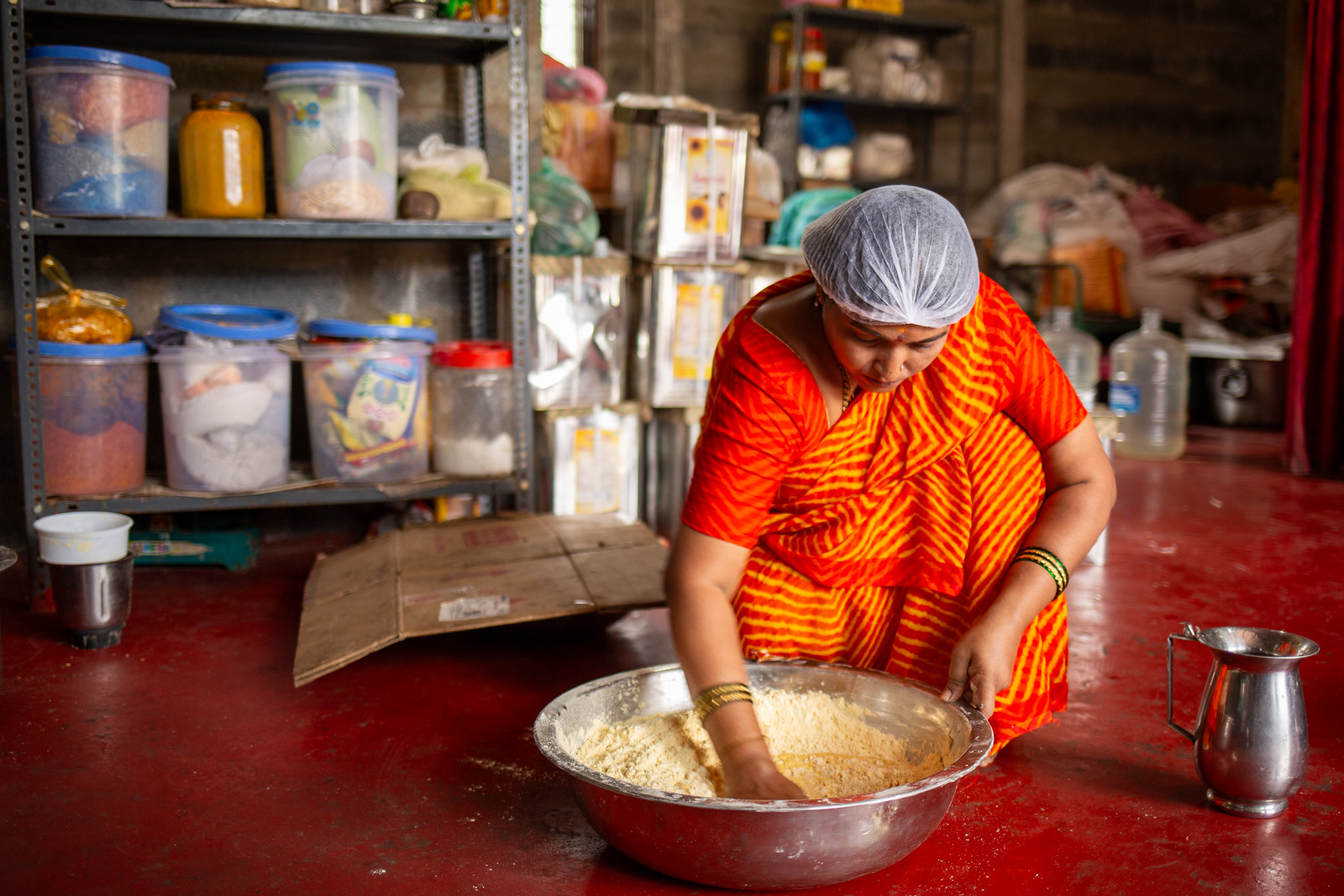
A small food business. A group making pickles or snacks to sell adjusts their recipe or price when the cost of oil or sugar changes, or when customers start asking for something different. The business cannot seal itself off from any of that.
A village school. What happens inside a classroom is never separate from what is happening outside it. A harvest, a wedding season, or an illness at home can all shape whether a child shows up that day, whatever the school itself is doing right.
A local market or mandi. Prices for basic goods move up and down based on fuel costs, weather in a completely different region, or a change in policy far away, none of which the shop or the farmer selling into it has any control over.
The One Thing People Get Wrong About It
It is easy to assume that a carefully defined project boundary keeps outside influences from mattering, as long as the plan inside that boundary is tight enough. Open systems say something less comfortable. The boundary drawn on paper does not stop the real exchanges happening at its edges. Money, people, weather, policy, and fashion keep moving across that line whether or not the plan accounted for them.
A boundary drawn on paper is a boundary. It is not a wall.

Key Takeaways
Open systems cannot be fully bounded. However carefully you draw the edge of a project or a plan, real exchanges of people, money, and information will keep crossing that line regardless.
This means staying alert to outside influences is not optional. Watching only what happens inside your own programme will always miss part of what is actually shaping it.
Treating something as a closed system is a useful simplification, not a real description. It can make planning easier, but it is worth remembering that the simplification is what is doing the work, not reality itself.
The next time a plan assumes its own boundary will hold, it might be worth asking what is already crossing that line, unnoticed, right now.
What is an open system in your work? Tell us in the comments!
Related reading: Change Over Time: What It Actually Means · Why Linear Planning Fails in Complex Systems