
A system can settle into more than one stable state, and it tends to stay wherever it has settled unless something pushes it hard enough. Push it past a certain threshold, and it can suddenly slide into a completely different stable state. Getting back to where it started is usually far harder than the push that moved it there in the first place.
This is closely related to tipping points, and the two ideas overlap on purpose. This post looks at where a system can rest, in one place or another, with a threshold in between. A tipping point is about the moment of actually crossing that threshold, when the pace of change itself speeds up. If you want to look at that moment specifically, we wrote about it separately in Tipping Points: What They Actually Mean.
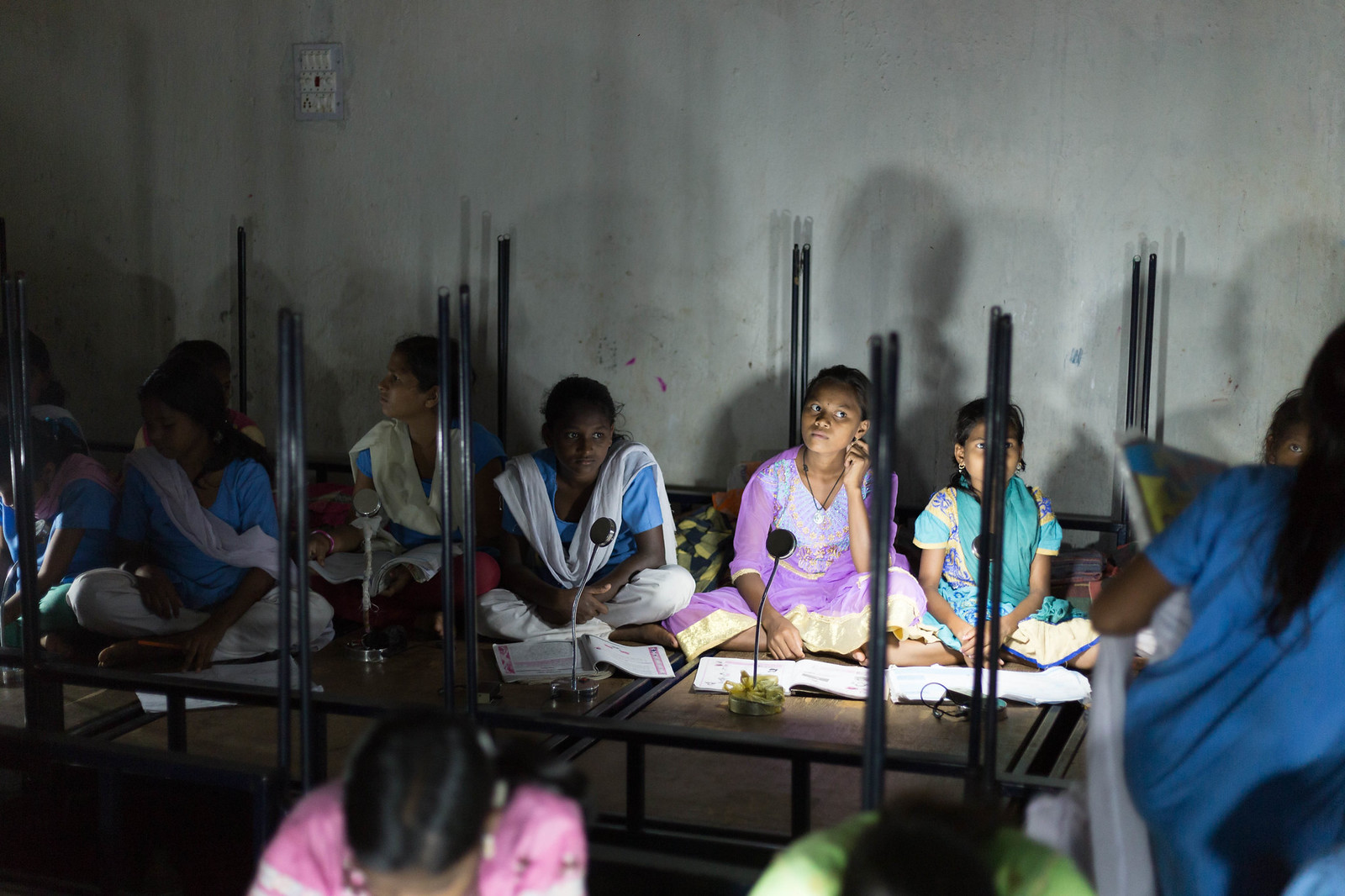
We described a version of this before, without naming it. In Drawing the Map Before You Start Walking, we mapped why girls in many parts of India leave school around Class 9. Once a girl leaves, marries early, and becomes a mother with limited options, the same conditions tend to get rebuilt around her own daughter. Staying in school and leaving school behave almost like two different stable states. A family sitting close to the edge, weighing safety, money, and marriage pressures all at once, can tip either way with a fairly small push. Once a girl has actually left, pulling her back is far harder than the original push that sent her out.
Where You'll See It
The same pattern shows up in systems that have nothing to do with each other:

A worn footpath across a field. Once enough people start cutting across the same line, the grass wears away and a path forms. After that, the path holds itself, because walking on bare ground is easier than walking through grass. But if people stop using it for a season, grass grows back over it, and the field returns to being just a field. A half worn path rarely stays half worn for long.
Trust in a local leader or committee. After a dispute over finances or favouritism, a village committee can lose the trust it had built up over years, almost overnight. Once that trust is gone, people do not slowly drift back to trusting again. Either something real changes and trust is rebuilt deliberately, or the committee stays sidelined, even if nothing else about it was wrong.
The One Thing People Get Wrong About It
It is easy to assume that any improvement seen during a project has become the new normal. Income went up, attendance improved, so surely it will hold. Domains of stability say something less comfortable. If the system was only nudged partway, and never actually pushed past its threshold into a new stable state, it can slide right back to where it started the moment the support stops.
The improvement was real. It just was not yet a different stable state. A temporary lift is not the same as one, and only one of them survives you leaving the room.
Key Takeaways

Knowing where these stable states sit can help you create change that lasts. If a programme or policy can push a system past its threshold into a better stable state, that change tends to hold on its own afterwards.
You do not need to keep pushing forever. Once a system has genuinely settled into a new stable state, it can stay there without continuous funding or effort, the same way it once held itself in the old one.
Sometimes the better move is to shift where the threshold sits, rather than pushing harder against it.Changing the conditions around a system can make a better state easier to reach in the first place.
Not every position in a system is one it can actually hold. Many outcomes look possible on paper but are not stable in practice, and a system placed there will not stay for long.
The next time a result looks fragile even though the effort behind it was real, it might be worth asking whether the system ever actually crossed its threshold, or only got close.
What are the domains of stability in your work? Tell us in the comments!
Related reading: Tipping Points: What They Actually Mean · Non-linearity: What It Actually Means · Drawing the Map Before You Start Walking