
A system is rarely standing alone. Most complex systems are actually made up of smaller systems inside them, and are themselves part of a larger system above them. A person sits inside a family, a family sits inside a community, and a community sits inside a much wider world, each level a real system in its own right.
This is related to open systems, though the focus is different. An open system is about how much crosses a system's boundary. Nested systems is about the fact that the boundary itself sits inside a bigger one, and has smaller ones sitting inside it. If you want to look at the boundary question on its own, we wrote about it separately in Open System: What It Actually Means. This is also closely related to multiple scales and levels, though the two point in different directions. This term describes the structural fact that systems sit inside each other. Multiple scales and levels is about what that fact demands of a practitioner, actually studying more than one of those levels at once. We wrote about that separately in Multiple Scales and Levels: What It Actually Means.
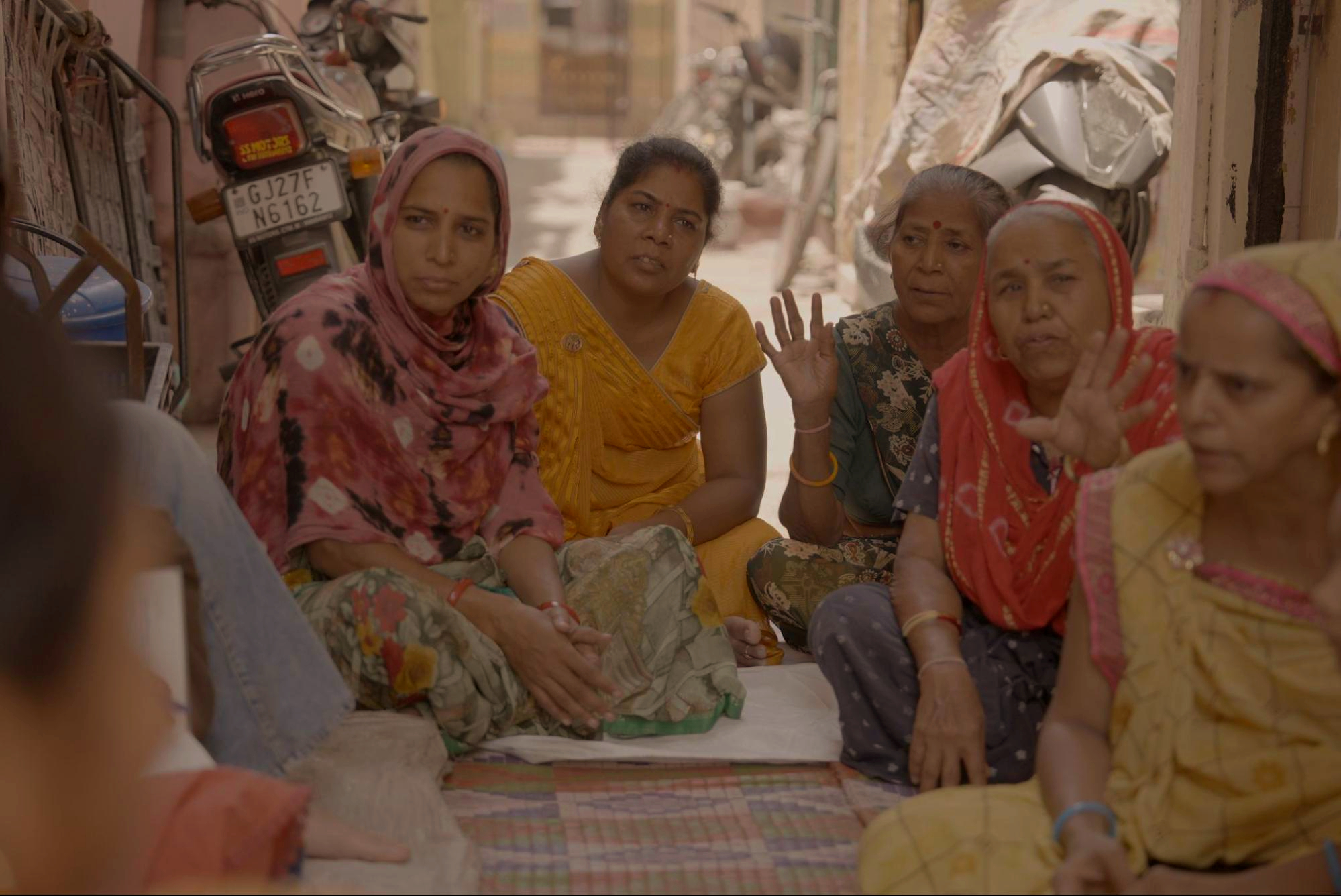
At Mahila Housing Trust, an organisation working in Ahmedabad's informal settlements, this shows up literally in how they built their own governance structure. A single household sits inside a CBO, a group with one representative from every household in a settlement. Ten or eleven CBO members are chosen by consensus into a CAG, a smaller decision making group for that settlement. CAG leaders who want to work beyond their own settlement can join the Vikasini Manch, a network operating across many settlements at once. Each of these is a real, functioning system in its own right, and each one sits nested inside a larger one.
Where You'll See It

The same pattern shows up in systems that have nothing to do with each other:
A person's world. A person sits inside a family, a family inside a community, and a community inside the wider world. A change at any one of these levels can ripple both inward and outward.
A forest. A leaf is part of a tree, a tree is part of a forest, and a forest is part of a much larger landscape that includes rivers, soil, and climate. Each level behaves like its own system, even though they are all nested inside each other.
A family's income. A single day's wage sits inside a week's earnings, which sits inside a month's household budget, which sits inside a family's longer term financial security.
The One Thing People Get Wrong About It
It is easy to assume that if you understand and fix a problem clearly at one level, say a single family or a single village, the fix will hold on its own. Nested systems say something less comfortable. A family sits inside a community, and a community sits inside a wider economy and set of policies. The real reason something is happening at the level you are working on might actually be sitting a level up, or a level down, from where you are looking.

The level where a problem shows up is not always the level where its cause, or its fix, actually lives.
Key Takeaways
It helps to notice the bigger system a smaller one sits inside, and the smaller systems sitting inside it. Understanding either direction can reveal something the level you started at cannot show you on its own.
The real cause of a problem, or the real way to fix it, is not always at the same level as where the problem shows up. A cause can sit a level higher or lower than where an intervention is actually taking place.
Working at just one level is rarely the full picture. Since every level is nested inside another, a change that looks complete at one level can still be shaped by what is happening above or below it.
The next time a fix seems to be holding at the level you can see, it might be worth checking whether the level above or below it agrees.
Where have you encountered nested systems in your work? Tell us in the comments!
Related reading: Open System: What It Actually Means